Science & Origin of Asphaltite
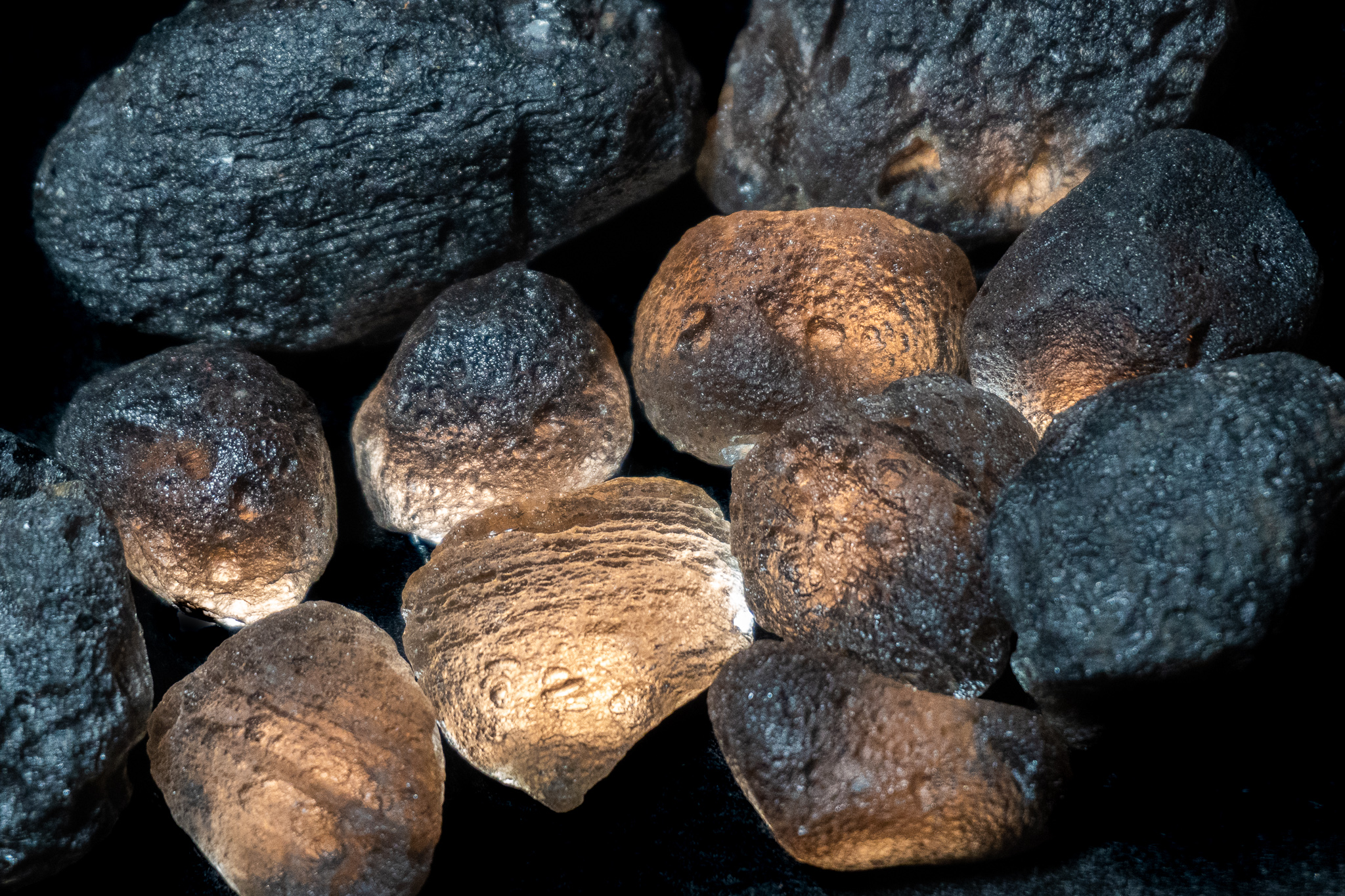
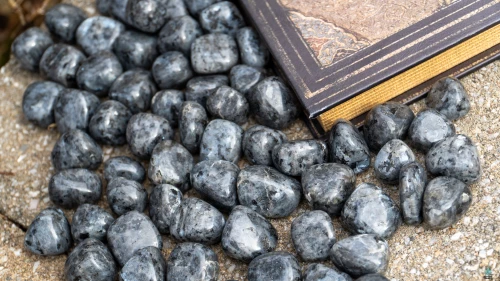
Asphaltite: Also known as Gilsonite® and Uintaite. It is a natural hydrocarbon mineral that crystallizes in large mass formations.
Its color is a shimmering black that resembles Obsidian but has a much higher melting temperature.
It was first discovered in the 1860s and was named after Samuel H. Gilson. The type locality for Gilsonite® is found within a 100kmx50km area of the Uinta Basin in northeastern Utah.
This mineral played a key role within Americas’s Industrial Revolution. It still continues to be a valuable asset in various industries.
Historic Uses
Going all the way back to 1888, Samuel H. Gilson marketed Asphaltite as a water-proofing compound, insulator, and even a lacquer coating. Moreover, Gilsonite® was a key component in the distinguished black paint that Henry Ford handpicked for the iconic original Model-T vehicle.
Today, it is primarily used in printing inks, drilling compounds, asphalt surface cover, and as an additive in chemical production.
Meaning & Energy
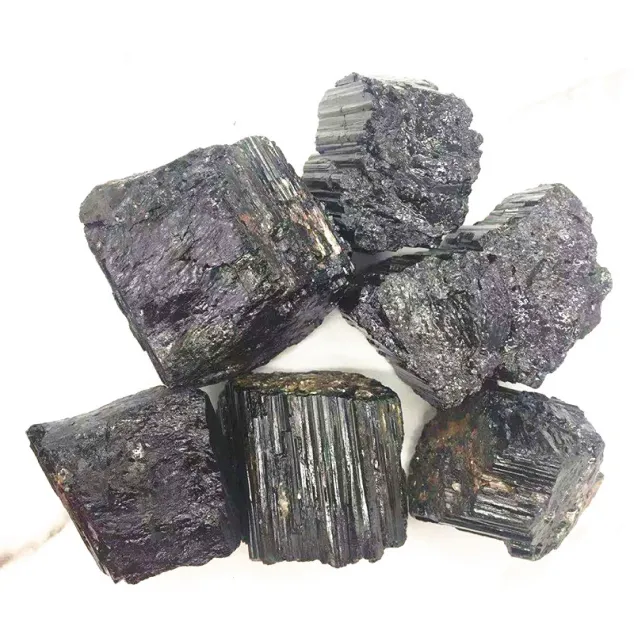
Asphaltite is a unique stone with grounding properties. These are similar to Jet, yet it carries the protective energies associated with Obsidian (Black) and Black Tourmaline.
It’s a gentler root chakra stone, encouraging you to center yourself and seek insight from fresh perspectives. The everyday emotions and distractions, which often influence your decisions, are separate from your core self and should not guide your life’s journey.
This remarkable stone serves as a powerful ally during your spiritual quest. It provides moments of reflection on your current self, not who you were or who you might become.
To truly tap into your highest potential here on earth, it’s crucial to understand your current needs. And which aspects of yourself need to be highlighted and nurtured.

 22Jul
22Jul
 by
by